Alec Wood, PhD and Colleen Fahey
Over the last several decades, voices have increasingly found their way into the products around us, from navigation systems and cars to smart speakers and home assistants. With generative AI, the number of products that can speak to us is growing even more rapidly, especially in the framework of voice user interfaces (VUIs)—products that both input and output vocal messages. Let’s explore some of the advantages and challenges of incorporating voice into products from a sonic branding perspective and survey some creative ways voice has been being deployed across industries.
Why Voice Matters for Brands
The instrumental value of product voices is evident: they enable hands-free utility, faster, lower-friction communication, and render products more accessible for those with limited dexterity, visual impairments, or other temporary constraints. But they introduce some pressing questions. What should this voice sound like? What rhythm, intonation, timbre, pitch, accent, volume, and tone what we can call, in short, its vocal identity should it have? How quickly should it speak? Should it be made to sound human, or are voices that sound like a machine as or more effective? Should it be warm, playful, calm or authoritative? How should these qualities vary by country or language? During what stages of the product’s use should the voice intervene?
These are not only product experience questions, but sonic branding questions. And their answers will vary depending on brand identity, product function, and individual messages. Altogether, an effective product voice is one that is congruent with the identity of the brand making the product, the content of the message, and the function of the product.
These points are supported by research. Recent work on AI-powered voice assistants has found that congruity between a brand’s image and the voice through which it speaks can influence the consumer experience and subsequent relationship with the brand (Huh, Kim & Lee, 2023). Indeed, endowed with a voice, a product ceases being merely something and becomes someone: a someone who speaks in the name of your brand. Product vocal identity must thereby be afforded the same level of attention one affords any other sonic brand asset. Special care should also be taken to ensure it meshes well with the broader (sonic) identity the brand maintains across touchpoints.
Other work on synthesized speech demonstrates that listeners reliably attribute personality to computer-generated voices and respond differently depending on whether that vocal personality is consistent with the personality of the message itself (Nass & Lee, 2001). More recent research has shown that even manipulating a single acoustic dimension of an AI-generated voice can alter consumers’ perceptions of the speaker and its fit with a product (Efthymiou et al., 2024). Voice is important in conveying attitude in general because listeners form social impressions from extremely small amounts of vocal information. McAleer, Todorov and Belin (2014) found substantial agreement in judgments of traits such as trustworthiness and dominance after listeners heard nothing more than a sub-second recording of a stranger saying “hello.”
The objective, then, is to create a voice whose perceived personality is most appropriate to the brand, product and situation.
Where are Voices Being Used Today?
1. AI assistants
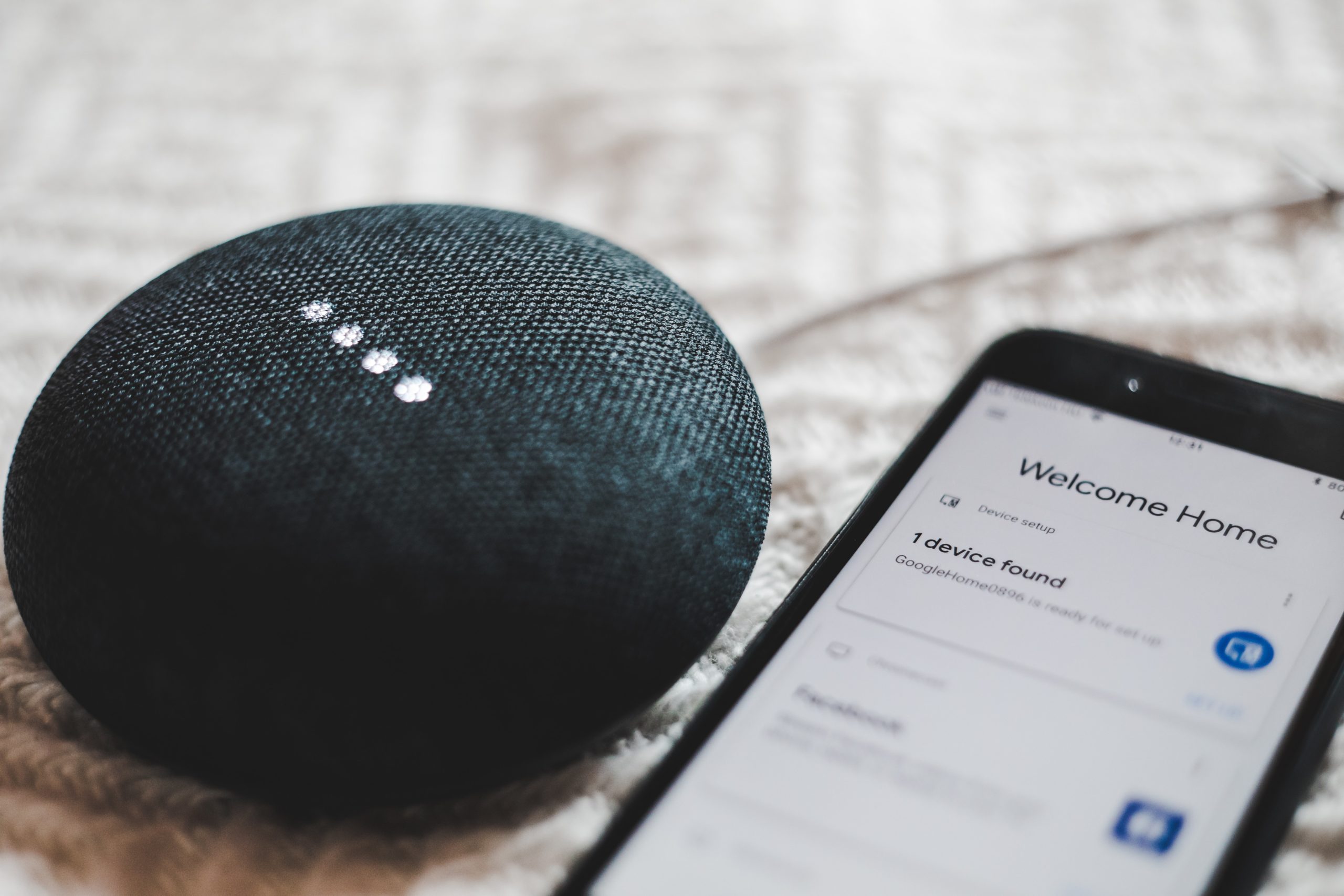
Alexa, Siri, Gemini, ChatGPT and other AI assistants have made the computer-generated voice increasingly conversational. Instead of delivering a single answer and falling silent, they can respond to follow-up questions, explain something in another way, make recommendations and sustain an exchange.
That makes the voice itself increasingly important. Is it reassuring or energetic? Formal or casual? Fast or measured? A voice does not merely transmit the AI’s answer, it helps determine what interacting with that AI feels like.
2. The connected home
Voice is also becoming part of the appliances and devices around the home. ECOVACS robot vacuums, for example, include a built-in voice assistant called YIKO. The assistant can tell users what the robot is doing, report its battery level or cleaning status, and respond to questions and instructions without requiring a separate smart speaker.
A vacuum cleaner that once communicated through little more than beeps can now speak to us directly. As similar capabilities spread through the connected home, more everyday products will acquire voices of their own.
3. Smartphones and apps
Our phones have spoken to us for years, through navigation, notifications and voice assistants. Generative AI is greatly expanding what those voices can do.
Increasingly, apps and services can provide spoken explanations, recommendations and assistance of their own. That means the voice a consumer hears may no longer belong only to the operating system. A retailer, airline, bank, fitness company or media brand can potentially have a speaking presence of its own.
4. Cars
Cars are an especially natural environment for voice because drivers cannot constantly look at a screen. Navigation systems have spoken to drivers for decades, but the range and character of these voices are changing.
XPENG’s in-car assistant supports continuous conversation and hands-free control of functions including navigation, climate and entertainment. XPENG even describes its newer voice system as having more humanlike speech patterns and a range of emotional tones.
Alongside indicators, warnings, navigation and entertainment, the assistant’s voice therefore becomes another part of the experience of the car, and potentially another expression of the brand itself.
5. Earbuds, headphones and smart glasses
Some of the most intimate technological voices are now heard through devices worn on the body. Earbuds can deliver directions, notifications, translations and AI responses directly into our ears. Smart glasses take this further by allowing a voice to respond to the world around us.
Meta’s AI glasses, for instance, can describe what the wearer is looking at, translate conversations, read and respond to messages and answer questions through Meta AI. With Live AI, the wearer can even continue a hands-free conversation without repeatedly calling up the assistant.
Here the speaking device can almost disappear from view altogether and we simply hear the voice as we move through the world.
6. Drive-thru agents
Wendy’s FreshAI, for example, speaks directly with customers at the drive-thru. The system can take orders, answer questions and understand requests even when customers do not use the exact language printed on the menu. Wendy’s has expanded the technology beyond its original pilot and describes the assistant itself as “Wendy.”
This is a significant change: the customer is no longer simply hearing a prerecorded greeting or announcement, they are having a conversation with a voice that represents the company.
Conclusion
For years, sonic branding has asked what a brand should sound like. But as more products and services acquire voices of their own, brands are encouraged to think more creatively about how voice can be incorporated effectively into their products and how those voices should sound. Even subtle changes in vocal identity can produce completely different brand and product perceptions. Only through a careful sonic branding lens can one lend their products a voice that is congruent at once with product function, brand identity, and message content.
Photo by Jeremy Bishop on Unsplash